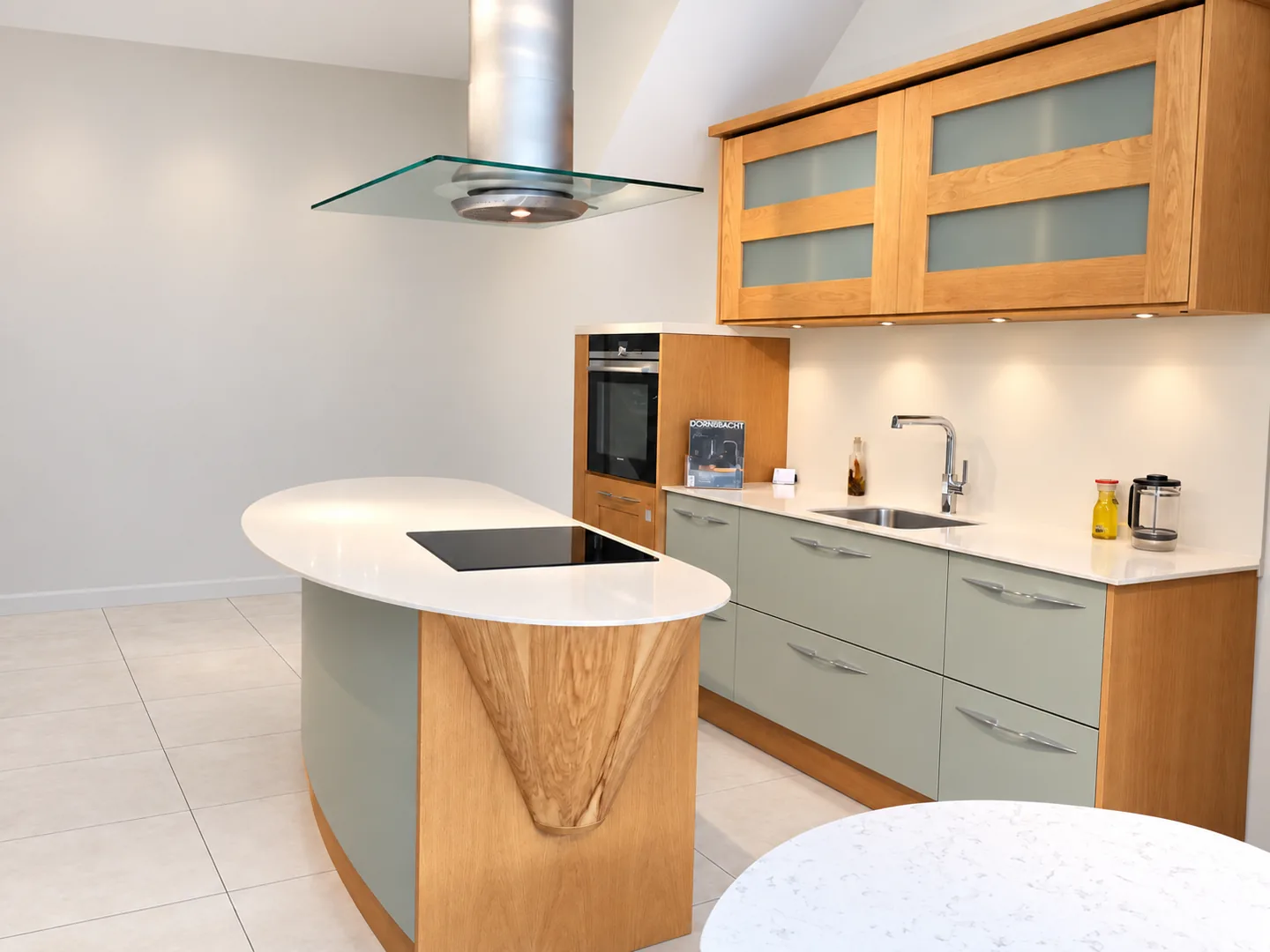
Work from one current kitchen plan
Give the kitchen designer and prospective fabricator the same revision of the layout. Mark wall runs, islands, peninsulas and tall units. Date each drawing so a later appliance or cabinet change does not get lost.
Separate visual preferences from decisions that affect manufacture. Colour and finish matter, but so do sink position, joints, exposed edges and the route a large piece will take into the room.
Ask how the island will be made and supported
A drawing can show a seamless island without explaining how it will be fabricated or carried indoors. Ask about the available slab size, proposed joints, edge treatment and any required support. Do not choose an unsupported overhang from a photograph.
For seating, discuss legroom and the base design with the kitchen designer. Have the fabricator confirm what the chosen product and thickness allow. A waterfall end also needs its own agreed dimensions, junction details and cost.
Treat the sink and splashback as part of the specification
Confirm the sink model and mounting arrangement before cut-outs are finalised. Add taps, sockets, upstands and full-height splashbacks to the plan. Ask how patterned pieces will meet at corners and changes of direction.
Include the visible edges and wall treatment when you enquire. A quote for the horizontal surface alone is not directly comparable with one that includes splashbacks and a waterfall end.
Confirm readiness before booking templating
Ask the appointed fabricator for a readiness checklist. Confirm when cabinets, end panels and appliances must be fixed or available, and who signs off the drawing before manufacture.
Keep any unresolved points visible in your brief. A question about a joint or appliance is easier to resolve before an order is approved than after the surface has been made.
Bring the sink and wall treatment into the same plan with our sinks and splashbacks checklist.
Common questions
Does a large island have to be one piece?
Ask the chosen fabricator. Product dimensions, fabrication details, support and access all need to be considered before agreeing a one-piece design.